Shell Mold Casting | High-Precision Casting Method | Aslantaş Group
What Is Shell Mold Casting? Advantages, Applications and Production Process
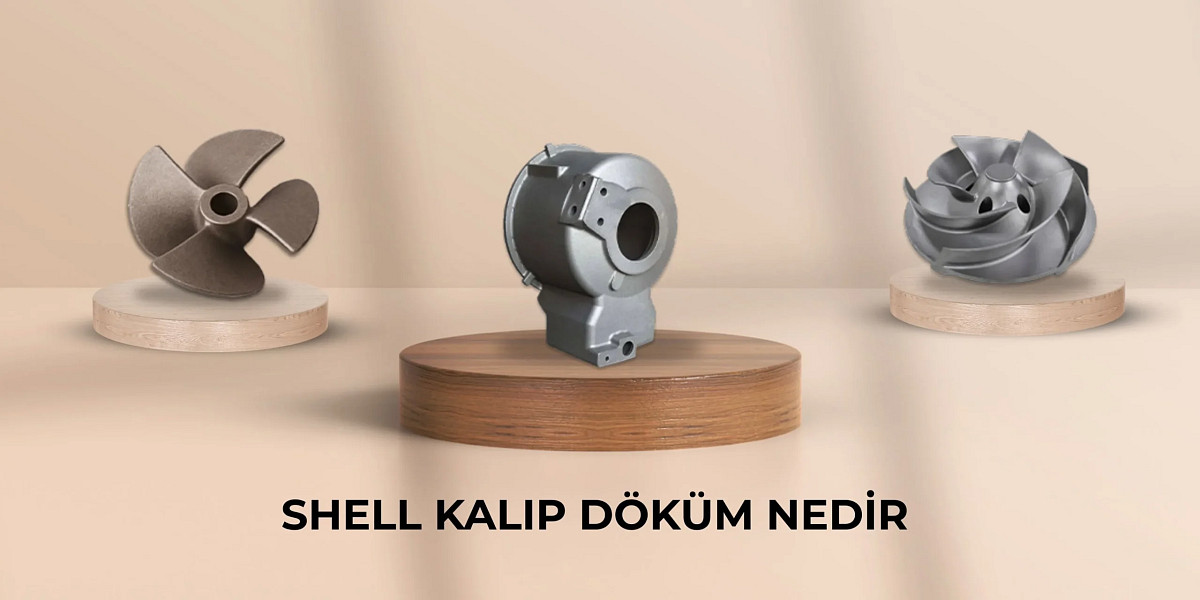
Shell mold casting (shell molding) is a modern casting method preferred especially for producing parts where high surface quality and dimensional accuracy are important. Compared with sand molds, it makes it possible to produce thinner-walled and more detailed products. In this article, we examine the working principle of shell casting, its advantages and the sectors in which it is used.
What Is Shell Mold Casting?
Shell mold casting is a metal casting method that uses shell-shaped molds formed at high temperature from resin-coated sand. The resin-coated sand is poured onto a heated pattern and hardened, producing a thin-walled mold with a smooth surface.
The Shell Mold Casting Process
Heating the Pattern
– A metal or aluminum pattern is heated.Applying the Resin-Coated Sand
– The sand poured onto the pattern hardens on the outer surface under the effect of heat (the shell forms).Removing and Joining the Shell
– The resulting half-shells are joined together to obtain a hollow mold.Pouring the Molten Metal
– Liquid metal is poured into the finished mold and left to cool.
Advantages of Shell Casting
High surface quality
Precise dimensional tolerance
Low machining requirement
Production of thin-walled parts
Production line compatible with automation
Suitable for mass production
Where Is It Used?
Automotive industry: Manifolds, flanges, flywheel housings, etc.
Defense industry: Small and precise parts
Mechanical parts: Gears, connection fittings
Energy sector: Turbine parts
Agricultural machinery and pump housings